The Dobby's Pumpkin Patch - An Allotment and Beekeeping Blog!
Sue and Lee's Vegetable Allotment pages, detailing all that we've been doing on our allotments, from clearing the 8' tall weeds that they were covered in when we started with our first plot in October 2006, through to where we are today, with 2 neighbouring full sized productive organic vegetable growing plots, 2 apiaries and 6 Beehives!!
FYI
Clicking on any of the pictures will open them at full size in the browser window, which means you will have to use the 'back' button to return to the main pages, whereas clicking to the left or right of any picture will open them in a new window, if you fancy a closer look at any of the piccies we've posted! We've included a Google Earth satelite picture of our plots and this years planting plan at the bottom of the page, next to each other. If you choose the Earth view on the satelite image you can rotate the image until it is lined up with the planting plan, then use the arrows in the plan to scroll from Plot 2 to Plot 1.
Please say hello to Poppy, our new Puppy! A black (with white toes n chest) Great Dane or Great Lanradane, who came to us last Sunday. Take a look at Dobbys Dog's for more info on her :)
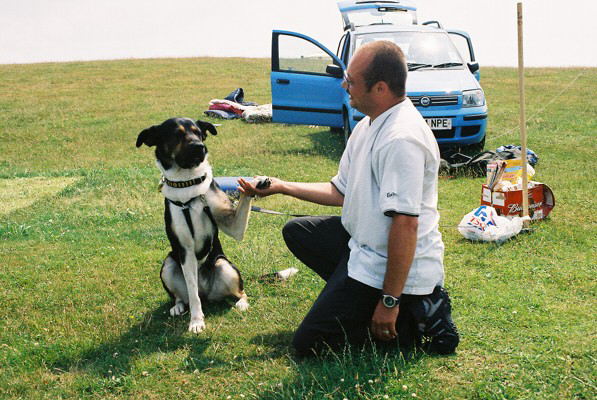
RIP Bella, our furbaby who passed over the Rainbow Bridge today after a short illness. Bella was a rescued Great Dane / Alsatian cross who came to us aged about 12 months in 2006 from Manchester Dog's Home.
A more loving friend it would be impossible to find, loyal, full of fun and love, always ready for a cuddle and always ready to defend us from anything, including the postie!
She tool ill last week, mot being able to keep anything down, after a visit to the vet on Friday we were hopeful of her recovering, but she didnt get any better this weekend, so she went happily into the vets today for exploratory surgery to see if there was a blockage in her tummy (which is what we thought it was), only for the vet to find 2 large tumours on her spleen, which were inoperable, there was nothing to be done and she would have deteriorated quickly and been in pain, so she stayed asleep.
She will always be remembered with love, and is now free of pain and hurt to play with her soul sisters, Willow and Lady, whom we will all be reunited with in the Summerlands.
A video wander around our 2 allotments, allowing you to see the layout, explaining a bit about how it all came together and showing where the apiaries and pond are and highlighting todays work.
Just a quick video from my new phone, showing the seedlings covering every south facing windowsill in the house! Hope you enjoy it :)
Just back from the AGM, at
Moss View Allotments, we are having our Plant Sale on Sunday the 20th
May 2012, so it you need any fruit /veg or flower plants / seedlings, or
fancy a delish cake, or even want to try (or buy) some of our honey, please pop
along between 11am and 3pm
Ive been mad at work recently, very short staffed (1 vacancy and 1 off sick has meant a total of 63 hrs this week, but 3 days off now, so some serious plt time methinks :), but at least I am getting the hang of it and making inroads into the performance problems!
The plot is still behind plan, but we have a few weeks now to get it prepared, so weather permitting we should be able to get it sorted out, lots of seedlings at home, so we;ve no choice but to get it sorted asap!
Had a new phone with a video camera on it, so going to try and record some video of the plot to share with you all, fingers crossed I can work it all out!
Greetings one and all, as the title suggests, we are still around, the pumpkin patch is still viable, however after the year from hell, its taken some time for me to be able to start to move forwards!
The past year I've.............
been under enormous pressure at work,
been put in a difficult position by the actions of others,
had to work 2 back to back 80 hour weeks,
made some mistakes and faced them,
and ultimately lost my job of 23 years in November 2011, having been put in an untenable position I resigned rather than be pushed any further, I was near exhaustion, pretty much burned out and came away with major feelings of anger, sorrow, regret, low self esteem and more besides!
Because of the stress and problems our attention to the plot hasnt been what we would like, we still harvested about £500 organic fruit n veg last year, but the plot got away from us a bit, we kept up with the bees, and still have 8 hives between the 4 of us.
Since November I have applied for 500+ jobs, had 40+ first stage interviews, 10+ 2nd stage interviews, been shortlisted 20 times, been offered 3 jobs that weren't doable financially, yet ultimately not been successful in finding a new job, until this week, when I got offered my first financially doable job!
Rest assurred, as things return to normal so will the allotments and the more regular posting!
So, for the first time this year I find myself playing catchup with the blog, for which you have my apologies!
With so much still to do (even after a week off early in May), and the reasonable weather we've been having (apart from the last 2 weeks of torrential rain), we've been spending a lot of time at the plot, not only working, but also a lot of beekeeping (we had early splits from 5 of the hives - pre May! - and Hive 1 went queenless) and a bit of fun with a Plant Sale and BBQ, more about that in the next catchup post!
As you can see, April brought lovely unseasonally hot and sunny weather, along with the daffodils on the plots!
The onions and garlic (overwintering) have been doing wel, although now need a darn good weeding (as you will see), the peas and bored beans are doing well, and its looking really good for a bumper strawberry harvest, along with another bumper rhubarb harvest too!
Tadpoles are growing nicely in the pond on Plot 2...............
.......... And there has been lots of blossom on the apple and pear trees!
Last years brassic beds have now been cleared and planted up with..............
.............. this years spuds, which are now thru and growing well!
And lastly for this post, the strawberry beds are looking very healthy, lots of vigorous growth and huge amounts of flowers! Mmm, strawberries, cant wait!!
Hope your early spring has been good and that your plots are growing well!
We managed to get to the plot on Thursday last week, to continue with rebarking up the paths and doing some clearing up, but with the weather so lovely (14C and glorious springlike sunshine), we noticed the Bees were really busy, so after taking a few piccies of how the plots are coming along we decided (along with Pat and Colin) to remove the mouseguards and allow the girls a bit easier access to the outside world!
As you can see, the newly relaid bark paths on plot 2 look great, really tidy the plot up a lot, shame that we've temporarily run out of them at the moment, so we cant get plot 1 done until some more chippings are delivered by the council (hopefully for this weekend)
The overwintering garlic and onions are coming up nicely (we were late planting them this year, normally they are in in October, but this year it was late December before the first 3 batches of onions and the garlic were put in!
As you can see, the bees were very busy, this piccy was of one of the quieter hives, some of the entrances looked as though there was a swarm in progress with the amount of bees trying to come and go through the mouseguards! The flying bees were not only fetching water (to mix with the honey), but also bringing home pollen, possibly crocus, willow or maybe even maple!
After donning our beesuits we removed the mouseguards (they stop any mice from raiding the hive in the winter when the bees are huddled together) which allows the girls a lot easier access!
Once we'd removed the mouseguards we did a quick inspection to check that the hives all had enough stores left, on opening them we were amazed by just how many bees were in each hive, really busy and full of bees, and plenty of stores left too!
Closer up, plenty of bees in there!
We also got the chance to play with our new kettle, I placed the base on top of an upturned hanging basket (to raise it from the floor, make it a bit more stable (less likely to be knocked over), easier for us to 'feed' and to increase the wind flow), which worked really well, although it is now permanently attached, as the plastic covering on the hanging basket melted and welded the base to the upturned basket! Ooops!
I have to say we were both impressed with its performance, once the fire was going it only took about 6 minutes to boil 1 1/2 litres of water, quite comparable with a gas camping stove, and a lot more fun to play with (as well as being a lot 'greener'!
Our chilli, pepper, aubergine and first tomato seedlings are now in the unheated greenhouse in the back yard, fortunately the greenhouse is located against the south facing garage wall (concrete), which acts as a heat sink, soaking up the sunshine thru the day, then radiating the warmth back into the greenhouse at night, without this passive solar heating (which was acchieved inadvertantly) we may well have lost a few of the seedlings in last nights frost!
Today we are going to be sowing more seedlings, brassicas, herbs, toms and anything else that we can at this time of year, ready for transplanting to the plot once the weather has warmed up a bit more!
Hope your preparations for the coming growing year are going well!
We suffered a break in at the plot last month, our shed was opened and our kettle, camping stove, and all the stainless steel gardening tools taken, about £150 worth in total, annoying and inconvenient, especially at this time of year when camping gear isnt readily available (or cheap, as it normally only goes on offer at the end of the camping season!)
We've managed to replace most of the tools, with a few things having been bought on special offer from the net, but the one thing we've struggled with is a new stove / kettle. We found a camping stove like the one we had stolen on offer for £15, but no-one has the gas in stock at the moment (or if they do, then its expensive), so after coming across this twig powered kettle, we bit the bullet and ordered one today!
So, this is the new toy for the plot, a 'twig' kettle, boils 1.5litres using a small quantity of twigs in a fairly short time, the design is ingenious!
The base holds a small fire, a bit of paper or straw to start the fire, then a few twigs, the 'kettle' is then placed on top, and more fuel fed thru the central chimney into the base, the water is held in a jacket around the outside, meaning a large volume of water in contact with the heat source, making a fast boil!
In addition a small pan, a small wok and frying pan are also available, so whilst brewing up, a bacon butty or some homemade soup could also be cooked at the same time!
Ok, its not cheap to purchase in the first place, but being powered by nothing more than a few twigs means no further runnning costs, so comparing with even a basic gas stove (£20 or so, plus gas for the year at £10 or so plus a camping kettle £10) it soon becomes aparent that actually its not that expensive, and with no further running costs it will actually save money in the future, aswell as being very ecologically friendly by not needing any gas (and the inherant waste packaging that is needed for the gas) and running on what is basically a waste product!
It sould be delivered sometime in the next week, so once we've given it a go, we'll report back on whether it is as good in use as it appears in design!
Lee especially is looking forwards to playing with it, he's got a flint and steel that he recons will be ideal for lighting the base, making it even more eco friendly and fun, plus it gives him an excuse to play with fire on the plot all year round! LOL!
I managed to get to the plot for a short while today, to plant the last 50 onion sets, and to get a few piccies of the newly cleared and rebarked paths on plot 2, hopefully I shall get them processed and put up here tomorrow! The chillies, peppers, aubergines and first of the toms we planted last month are all doing really well, almost every windowsill is filled with 1" to 3" tall seedlings at the moment, cant wait till the temperature rises a bit and we can get them planted!
Hope your preparation for the coming growing year is going well!
Forgot to take my camera to the plot today, so cant share how good its looking after todays hard work, but I can tell you what we've been up to!
We got to the plot for about 1130am, it was cold (3C max and dropped to 1.5C later on), windy (tho it dropped in speed as the temp dropped) and started out being cloudy (tho it lifted as the temp dropped to reveal low late sunshine). It was one of those days where it was too cold to undertake anything that kept you static, you needed to be moving and generating some bidyheat to stay warm, cold but productive weather!
Lee started off by having a bonfire, burning the grapevine prunings and the raspberry and fartichoke cane trimmings, whilst I started to fetch barrows of bark chippings to relay the paths on plot 2!
We broke for lunch at 2pm, having Pat's homemade carrot and corriander soup and some sausage rolls, then pressed on with the bonfire and barking up!
Lee finished the bonfire at 4pm, so we broke for a cuppa tea, then started to relay the wheelbarrows to bring the bark chippings from the far end of the plot, after 25 barrows full we finished at 5pm, with the temp dropping quickly, after redoing almost all the paths on Plot 2!
A productive (if cold day), PLot 2 is now looking much better than it was when my hols started 9 days ago, hopefully in the next week or so (back at work tomorrow) we'll be able to get the paths cleared and barked up on Plot 1, then it will just be a case of clearing and mucking the beds ready for planting once the weather improves a bit!
Hope your winter clearing and preparations are going well!
Well, with only tomorrow left of our hols, we've made some progress on the plots, but with the wet, cold and windy weather of the past week, we've not quite done as much as we'd like, however, plenty of research / reading / reskilling has been taking place as I contemplate the possible realities of life after Peak Oil and living in a world which is sufferring Energy Descent!
(For those who arent yet aware of the possibile problems that could be facing us all in the next few years, take a look at some of the links in the Low Imact Living section (on the right of the screen), or take a look at these links for a bit of basic info.......
So, what does it all mean? Basically we've reached (or will soon reach) the point where the amount of Oil we can produce has peaked, although there is still lots of oil in the ground it is going to become more difficult and expensive to extract it (as most of the easy to extract reserves have already been used), yet demand for oil is still rising. This will result in prices getting higher and higher, and a shortfall of the production of oil in relation to its demand, which will push prices even higher.
Our industrialised society relies exclusively on oil to work, we need the fertilizers (which are produced from oil) to grow our food, we need the petrol and diesel to travel to our places of work and for the supermarkets to distribute the food throughout the Uk (typically most Uk Supermarkets have food reserves for only a day or two's supply, if they cant resupply, then they will have empty shelves!), if prices rise for oil, so will everything else, until it reaches a point that we cant afford it and cant travel any longer, we cant afford the prices of basic foods and society is then in danger of falling apart (there have already been food riots in many countries)
You may think that emerging technologies will come online in a manner to reduce our dependance on oil and allow life to continue as it has for the past 40 years or so, but in order to be effective, they need to be coming online NOW, new power stations can take 5 to 20 years to come online (and although they would provide electricity, they wouldnt provide enough in order for us all to have an economically affordable personal transport system) and there are other factors that may prevent them ever becoming the solution to the problem of a world with less / overly expensive oil! (There are problems with the availability of the minerals that are required in order to produce viable electric cars, there isnt enough to allow us to relace all the petrol and diesel cars in the world with electric versions, and how quickly would we be able to produce them anyway?)
There are things we can do, ranging from going totally 'off grid' for all your energy / water / fuel supplies (which needs approx 3 to 5 acres of land per family / commmunity unit) through to less drastic measures such as those advocated by the Transition Town movements. (http://transitionculture.org/ ), (http://www.transitionnetwork.org/ ), who are looking locally at reskilling, building an infrastructure that looks at food and fuel supplies in a world where 10 miles is about as far as you could travel in a day and various other aspects of living in an Energy Descent world.
This is a subject that interests me, not only in relation to how society would fare (would it survive or collapse?), but also in relation to what skills we would need to live in a world where we had to produce the majority of our food, goods, services and fuel locally! Assuming you are able to find a way to provide your home with fresh water (rainwater harvesting and filtration system perhaps?), heating and cooking fuel (woodburning stove with back burenr to rpovide hot water and central heating) and grow enough food to feed yourselves with, then there are a myriad of other things that you need to consider!
Even if you just take a few minutes to look around your kitchen, how many of the things that we use daily could you provide for yourself? Salt? Sugar? Vinegar? Cooking Oil? Tea? Coffee? Milk?
We may know where many of these things come from (such as Salt from mines or from evaporating sea water), but would you be able to source them locally, or even make something that you could trade with others for?
What about those things you need to preserve your crops to allow you to eat them in the winter and spring? Do you know how to make vinegar, how to smoke food, can your surplus crops, how to salt meat (or even where to get the salt from?)
What about something as simple as yeast (for making bread and fermenting excess crops into alcohol - Peak Oil may mean energy descent, but it doesnt mean we need to do without everything thats fun, lol), would you know how to capture wild yeast and cultivate it to bake your own bread?
What about vegetable oil? We're too far north here for olive trees, and a lot of the things we cook need oil, where would you get it from? How about rendering down pig fat for making your own Lard? Or extracting useful vegetable oil from seeds? What about clothing?
Anyhows, if Ive got you thinking, then thats what this post is about, if we start finding out as much as we can now, then when the energy descent begins we should be able to do more for ourselves and pass that knowledge on to others who dont know as much!
A lot of this thinking was prompted by a visit to the Trafford Eco House blog site, a normal family home thats looking at doing what they can to reduce their reliance on oil and fossil fuels, some great ideas (such as their aquaponics system, raising fish in a polytunnel, fish waste feeds bacteria who convert it into plant foods, who then filter the water for the fish, definitely worth a look!)
Another site worth a look, is this one, 3 acres of wasteland in America produces 450000kilos of food and 10000 fish a year, perhaps a way for local communities to feed themselves?
Anyhows, we got to the plot today, planted out the thinnings of Lavender from the seedlings we planted in pots (next to the polytunnel last year) around the edges of the plum tree bed, I pruned the grapevine and we started to bring some fresh bark chips up to the plot to relay the paths, hopefully we should (weather permitting) be able to get the rest of the paths barked up tomorrow!
Weather was a bit warmer today, it reached 6C by lunchtime, so we got down to the plot after lunch for a few hours!
Lee cut back all the rasps in the 'fedge' (edible or food producing hedge) whilst I cleared the bed at the front of plot 2 for the onion sets, all 200 (3 varieties) of onion sets are now planted, some behind the garlic, some in the bed immediately to its left, and the rest in 4 rows in the bed behind, which still leaves us a bed and a half for the onions that are growing from seed (of which there are 3 trays in the back bedroom windowsill!)
After that we had some crocus bulbs to plant (in the grass at the front of both plots) and 2 Thyme plants and 3 Geranium plants we were given by Janet (she was having a clear out and splitting some of her perennials that had got too large), so they went in on plot 1 under the fruit trees, hopefully they should do okay there, look good and also give us a bit of groundcover (and reduce the weeds!)
Finished up just as it started to get dark (5pm ish, lovely that the nights are staying lighter for longer!)
Tomorrow and Tuesday Lee has to work in the evening, so Im not sure whether we'll manage to get to the plot much, but we're off on Wednesday and Thursday, so weather permitting we should be able to get down to the plot and do some more, I really want to prune the grapevine, we've a lot of stuff that needs burning, the paths need clearing and rebarking, then of course there's plenty of beds that need clearing!
Today dawned frosty and bright, not a cloud in the sky, so once we'd allowed the sun a chance to melt the frost (and bring the temperature up a bit) we headed straight for the plot, taling the broad bean seedlings and the garlic and onions along to see if we could get them planted!
As you can see from this piccy of plot 2, the frost never truly left us, anywhere in shadow still had frost for the whole of the day, but undeterred by the cold temperatures (and both wrapped up warmly) we set to clear some room, plan out the beanery (going into the beds behinnd the pond), plant the broad beans, clear the garlic and onion set beds and try and get them planted!
One job we also had to do was to get the 'dual plum' tree we picked up from Parkers Garden Center last October! This was due to go into the front bed (on the left), the one with all the Lavender in it!
Plot 2 needs a really good clearing, the sweetcorn / squash bed from last year will become this years 'beanery', with plans for 5 or 6 tall cane support tunnels, a cage for the french beans (to protect them from the wabbits) and plenty of space for peas and broad beans!
The first of the garlic / onion beds at the front of plot 2, now cleared and planted with 120 saved garlic cloves!
The back end of this bed will have onion sets in it by tomorrow night, as will the bed to the right!
The French Bean 'cage', in its new position!
The cloche protecting the first 30 broad bean seedlings, they are AquaDulce, so are frost hardy, but as they were only sowed about 10 days ago we thought it best to protect them with the cloche!
Lee next to the newly planted dual plum tree. hopefully this will take and we should have a couple of varieties of plum to feast on in a year or two!
We also noticed the rhubarb is starting to come up, cant wait till we can harvest the first stalks, rhubarb crumble and custard, yum!
I couldnt resist taking this piccy last night, we had 2 batches of Summer Fruits Wine to bottle, 2 gallons in total, and as I was cooking tea (hence the chopped mushrooms on the chopping board) Lee decided he would syphon it into the bottles, I caught him using his mouth to stop the port from flowing whilst he changed bottles (or so he tells me), and had to run n get my camera, cos it just struck me as funny!
He did manage to get some of the port into the bottles! Lol!
Actually, it was a batch of mixed summer fruits wine, made with 1lb Elderberries, 3lb Rasps, 2lb strawbs and 1lb of blackberries, it came out at about 20% abv, very moorish, quite sweet, but full of flavour, very like a decent port, so its been labelled as Foragers Port, we're taking a bottle round to Pat and Colins tonight, so we'll let you know what it was like tomorrow!
Hope your plot clearing is proceeding a pace, and your early seedlings are coming up in the propogators!
So, with the weather frosty, cold, wet and foggy all day (max temp at +0.5C) we didnt make it to the plot again today, but instead did a couple of other things instead! Whilst I potted on the peppers, chillies, aubergines and tomatoes, then planted a few more pepper seeds in the heated propogators, Lee made a batch of Traditional Mead (flavoured with cloves and cinnamon), then we had a trip to the homebrew shop in Northwich, called Brew2Bottle!
We'd heard about the shop from a friend who lives in Northwich, and decided to have a trip over to get a few bits n bobs, more bungs and bubble traps (air locks) to go into the 3 demijohns Lee picked up yesterday evening (courtesy of freecycle), plus a couple of things we'd seen on their website that would make our brewing tasks a bit easier! http://www.brew2bottle.co.uk/
The first thing we had wanted was a 2 lever corking machine, we'd inherited a cheapo one (the type you hit with a mallet to force the cork into the bottle), but found it not only difficult to use, but also doesnt force the cork all the way into the bottle, which doesnt look great! http://www.brew2bottle.co.uk/home-brew-equipment/bottling-equipment-htm/twin-lever-corker.html
The next thing we wanted was a bottle dryer, trying to wash, sterilize and dry up to 30 bottles at once is a right pain, especially as we cant fit more than 18 on the sink drainer, so the bottle drying tower (that supports the bottles neck down one above the other) that holds up to 80 bottles is something that will make bottling a lot easier! http://www.brew2bottle.co.uk/home-brew-equipment/bottling-equipment-htm/80-bottle-drainer.html
Lee also spotted a Cherry Brandy strong wine kit, basically a 22percent ABV wine kit with a cherry brandy flavour, they had a few flavours (the shop owner gave us a small glass of the peach schnapps flavour one, which tasted great), but we decided to try the cherry brandy one first, if we like it, then we may well get some more flavours and try them! In addition to the main purchases we got the extra airtraps and bungs we needed, plus some oak chips (for adding that oak aged taste for the wines and meads) and more corks! AAll in all a productive trip, if not a particularly cheap day (although I have to admit, Brew2Bottle's prices are very good, especially his bottles, thet are as cheap as any we've found online, and with the added advantage of no postage to pay!)!
So, we've now got another flavoured Mead (Melomel to give it the proper name) on the go, and undoubtedly will have a batch of the Prohibition 'Cherry Brandy' on the go tonight aswell! I hope the high alcohol spirit kits are as good as they look, as it would be a great way to brew our own spirits without going to the expense of buying a 'still' (which is unfortunately illegal to use for the distillation of alcohol within the uk! You can own one, and use it to make distilled water, or essential oils, but not for making your own spirits!)
Well, today we start our last batch of hols for the financial year, Lee is off for 5 days and Im off for 9 days, time to relax, put our feet up and chill out..... not! Lol!
The actual plans for the week are to get on top of sorting the plots out, ready for the coming growing season, so we've got the greenhouses to empty, clean and some compost / manure to add to the greenhouse borders, the grapevine to prune, the raspberry canes to prune,the compost bins to turn over, onion sets and garlic to plant, beds to clear and muck, planting areas to sort out (I want to move the pea and bean supports into place so they will be ready for use in a few months time), the dual plum tree to plant, the early sown broad beans to plant out, the shed to clear and tidy, paths to weed and remulch with bark chippings, and finally have a big bonfire to take care of the prunnings (and give us a good source of potash for putting on the crops), all of which is going to be very much weather permitting! Sounds like a relaxing holiday huh? Lol!
Our planting plans are already in place, the widget below shows the new layout for the forthcoming growing year, use the right and left arows to switch between the plots!
Planting Update
The chillies, tomatoes, aubergines and peppers are starting to come up, so today Im going to be potting on some of them from the heated propagators, we've got Chocolate Habanero's, Scotch Bonnet, Dorset Naga, Naga Jolokia, Cayenne, De Cayenne, Tokyo Hot, Mohawk, Jalapeno chillies all up, plus a fair number of toms, aubergines and peppers, so they all need to come out of the heated propogators and be planted on! Once they are out of the propogators I can plant a batch of the later chillies and peppers in a week or so!
Dorset Naga, Scotch Bonnet and 2 Chocoltae Habaneros, the first of my fiery hot chillies!
Peppers and chillies, ready to be pricked out from the heated propagator!
3 trays of onions (on the windowsil) and the broad beans (next to the homebrew)
Aubergines and peppers, lots of them!
The Bored Beans, we'll be planting these unddr cover at the plto this week methinks!
Homebrew Update
On another front, our homebrew experiments have been going well, with batches of Elderflower (2 batches), Bored Bean, Summer Fruits, Elderberry, Celtic Druids Mead, Gewurtztramminer (Grape from the plot) all finished and bottled (and a fair bit drunk or given away as Yule prezzies), with a batch of chardonnay (from kit), a batch of red berry and the large batch of 5 gallons of mead all still on the go, with another batch of Mead due to be started this week!
I have to say that most of the wines we've made have been very good, some of them I wouldnt have minded paying £5 to £10 a bottle for them (especially the first batch of Elderflower (lovely and crisp and light), the Elderberry (very fruity and dry) and the Bored Bean (slightly sparkling, very crisp and refreshing)). The wine we made from the grapes from the plot we are a little less pleased with atm, it is quite sharp, tho hopefully a good 6 months to let it age will make it much more pallateable, but only time will tell!
In total we've already bottled 48 bottles of wine and mead, with another 42 bottles worth still fermenting, definitely a good way to use up excess produce and provide a lot of extra value to the produce! Hopefully this year we will be able to make even more, I especially cant wait to try making some of the rhubarb rose wine that Dave (on the plot) makes!
Beekeeping Update
We were fortunate enough to have a lovely dry and warm day last Thursday, so we took the opportunity to do the winter bee inspections (and varroa treatment with Oxyalic Acid) with Pat and Colin, the bees were busy, with plenty flying, and every hive had good levels of stores and a large amount of bees in them! Looks like (so far at least) all 6 of the hives are faring well, though only time will tell how well they come through the winter (but we are hopeful that they should all make it through!) On checking back a few days later, the Varroa mite drop was actually small, with between 50 and 120 mites per hive, which is a very light infestation, so it looks like the icing sugar treatment is helping to keep the Varroa levels low within the colonies, definitely a good thing!
Breadmaking
In October last year (whilst we were on our autumn hols) we had a major problem with our old cooker, we'd already been struggling with an oven door that wouldnt properly seal, then the main oven totally died, leaving us unable to cook anything in it, after looking round we were fortunate to drop on this Leisure 90cm Range cooker (dual fuel), which we knew was not only perfectly proportioned to fit where our old (and cheap) 90cm range had been (a Beko one that was impossible to get spares for), but is also one that spares will be available for, so we took the plunge and treated ourselves to it. Since then not only have we been able to cook up some fab food, but I've also started to make all our own bread!
This is todays batch of bread, just prior to being baked, 2 x lb tin loaves (cooked in the wonderful silicon loaf tins), a 1lb farmhouse loaf and 8 barm cakes. Lee found an online food retailer (www.bigbrandsforless.com) who does some amazing deals, so we've been buying their 3.5kg bread mixes, which is enough to make 7 loaves, for £1.23 each, making each loaf less than 20p each (even better when they did a 'buy one get one for free' offer)! Having seen the ridiculous prices that supermarket bread has now risen to, making a batch of 4 loaves and then freezing 3 of them (to keep fresh until we are ready to use them) has proved not only an exceptionally cheap way of getting our bread, but also has proven to us both just how much nicer homemade bread actually is!
The 1lb wholemeal farmhouse loaf and 2 breadcakes, the bread mixes that bigbrandsforless sell include white (which rises the best), granary and wholemeal, needless to say, we've got 6 months of bread mixes stored in the back bedroom!
The 2 x 1lb white loaves, before baking! The white bread mix seems to rise the best, and the flavour is great too! I tend to do the bread dough in 2lb batches, just pop the right amount of bread mix into the mixxer, and add the correct amount of warm water, let it mix for 7 mins or so, then turn out, knead it a bit, shape the loaves, pop iinto the baking tray and pop into the oven for 1/2 hour to rise! After that a quick bake and you get fantastic homemade bread!
So, after 15 mins baking at 220C for the buns, and a further 15 mins baking at 200c for the loaves, this is what you get! Crusty, tasty, homemade breads, enough to last us for 4 days or so!
All this for less than 20p a loaf? Compared with over £1 for plastic supermarket bread, crazy! Lol!
The homemade bread has been sooo tasty that it even inspired me to write a poem about it!
Freshly Baked Bread - a poem (of sorts!)
There's nothing so fine as homemade bread,
A daily staple to keep us all so well fed,
Nothing more than flour, water and yeast,
Yet once cooked it becomes a veritable feast!
Supermarket bread seems made of plastic,
All so soft and white and so elastic,
Once sold in bulk so very cheap,
But now the prices could make you weep!
Now its cheaper to make your own,
Nothing gives such a sense of home,
As that delicious fresh bread smell,
That from your childhood you recall so well!
Tis so simple and easy to make,
Not as complex as a cake,
Mix it all then knead the dough,
It has to be done, like just so!
Then for a time you have to wait,
Give it a while for yeast to create,
As almost before your very eyes,
Your loaf does now so proudly rise!
Now in the oven its time to bake,
Dont let it burn for goodness sake,
Wont take long and then its done,
Barm cake, loaf, roll or bun!
Let it cool, just a bit,
Then its time to cut into it,
Real butter spread on fresh hot bread,
For it there's truly a lot to be said!
Suzanne Read
11th December 2010
Anyhows, thanks for reading, more updates and plot piccies to follow htis week as we (hopefully) get some sorting out done in the allotments! Hope your prep and clearing is going well, and that you will also be ready for another great growing year!